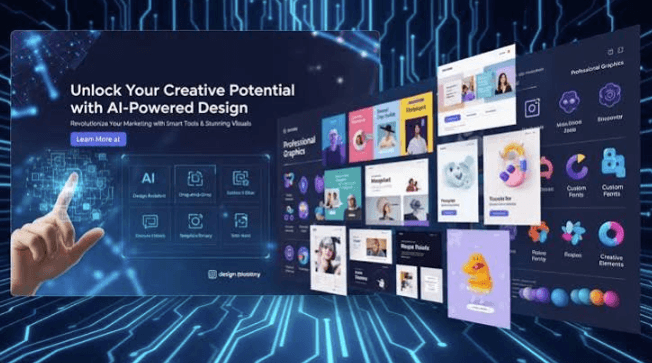
Artificial intelligence speeds up flyer layout prototyping by generating and testing design variations with minimal human input. It orchestrates AI-driven grids, image-aware arrangements, and dynamic typography-color systems to keep aesthetics consistent while boosting iteration velocity. The approach translates data-backed choices into tangible outcomes, optimizing images, hierarchy, and responsiveness while maintaining focal points across devices. With analytics and controlled experimentation, AI promises scalable improvements, inviting further exploration into how constraints shape creative freedom. The next question centers on measurable impact and practical adoption.
How AI Accelerates Flyer Layout Prototyping
AI accelerates flyer layout prototyping by rapidly generating and testing design variations, allowing teams to explore form and function without manual, trial-and-error iterations.
The approach leverages AI driven grids and image aware layouts to boost Prototyping speed while maintaining aesthetic control.
Color harmony evolution emerges through data-driven feedback, enabling informed choices and empowering creators toward freer, purpose-driven experimentation.
What AI-Driven Typography and Color Bring to Flyers
Typography and color, when guided by AI, become dynamic design systems rather than static assets.
The piece examines AI typography and color psychology as active levers in flyer impact, enabling responsive typographic scale, legibility, and mood alignment.
It breaks down two word ideas: Typeface harmony, Palette psychology, while signaling freedom to experiment within data-informed constraints.
How AI Optimizes Image, Hierarchy, and Responsiveness
The optimization of images, hierarchy, and responsiveness follows from the prior exploration of AI-driven typography and color, translating data-informed choices into tangible layout performance.
AI automation streamlines asset handling, dynamic scaling, and adaptive grids, while visual compression preserves quality at speed.
This approach sharpens focal points, preserves hierarchy, and maintains legible responsiveness across devices, empowering designers with precise, freedom-driven control.
Measuring Impact: Data-Driven Variants and Real-World Outcomes
Could measured outcomes fuel more reliable design decisions, or do they merely reflect short-term fluctuations in user behavior? Data-driven variants illuminate which elements persist beyond hype, while real world outcomes reveal practical viability. The approach blends controlled experimentation with observational insight, translating analytics into design choices. This methodology supports scalable improvement, balancing novelty with proven effectiveness, and empowering teams to pursue freedom through evidence-based flyer optimization.
Frequently Asked Questions
How Do AI Tools Handle Accessibility in Flyer Layouts?
AI tools enforce accessible design by ensuring readable contrast, scalable typography, and keyboard navigation, while bias mitigation algorithms reduce content bias. They empower designers seeking freedom to craft inclusive flyers without sacrificing creativity or technical rigor.
Can AI Replace Human Graphic Designers Entirely?
Can AI replace human graphic designers entirely? No. It synthesizes patterns and speeds production, but ethical concerns arise. It cannot replicate authentic intuition; human judgment remains essential for nuance, freedom, and meaning beyond algorithms’ reach.
What Are Ethical Concerns With Ai-Generated Imagery in Flyers?
The ethics of AI generated imagery in flyers hinge on consent and ownership, as creators seek transparent licenses and fair attribution. Analysts note potential bias, copyright ambiguity, and consent gaps, while designers pursue equitable collaboration and freedom within legal frameworks.
See also: Smart IT Platform 373514227 Solutions
How Secure Is Client Data Used by AI Design Tools?
Client data security hinges on robust encryption and access controls; AI tools must minimize data exposure. Data privacy concerns persist, while model bias can emerge from training data, demanding transparent governance and continuous auditing for responsible, freedom-friendly design workflows.
Will AI Reduce Production Costs Long-Term or Only Upfront?
AI cost savings emerge over time, not just upfront, as workflow automation compounds efficiency, reduces iterative retries, and optimizes asset reuse; long-term gains balance initial investments, delivering durable productivity without sacrificing creative freedom.
Conclusion
AI transforms flyer design into a rapid, evidence-based studio, where each iteration learns from data and user response. It choreographs typography, color, and imagery with precision, while AI-driven grids and adaptive layouts keep focal points intact across devices. The result is a perception engine, a compass that steers creativity through measurable outcomes. Like a satellite-guided wind, AI aligns aesthetics with performance, enabling designers to navigate complexity and land on consistently compelling, data-backed layouts.